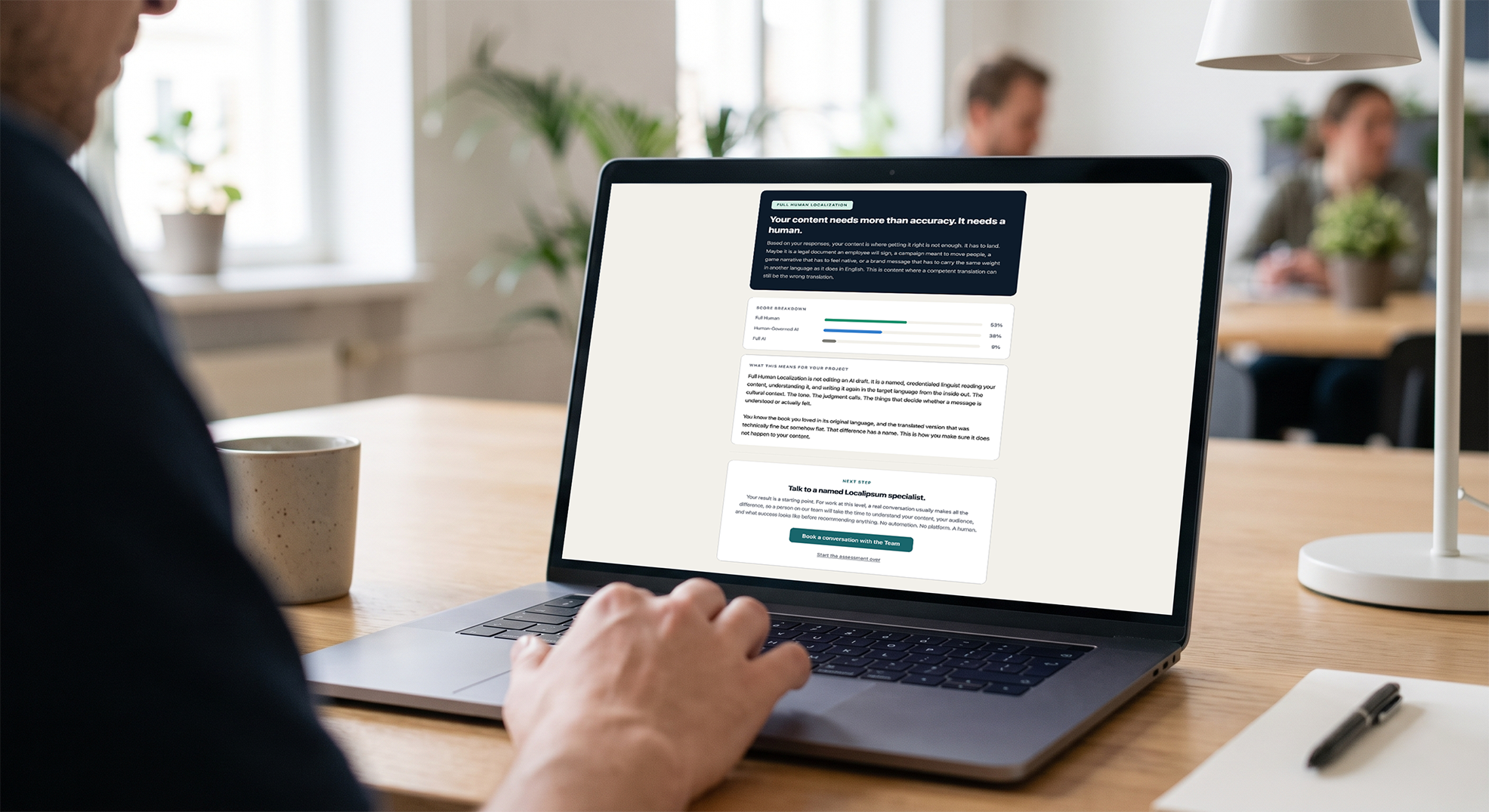
The assessment recommends one of three approaches.
Full Human Translation for content where accuracy alone is not enough and a credentialed linguist needs to write it from the inside out.
Human-Governed AI Translation™ for content that has to be right at real-world speed. AI writes the first draft, and a named specialist reviews and approves every word before it reaches you.
Full AI for content where speed is the priority and the stakes are manageable.
Three minutes. One clear answer.
Who is reading this translation, what they expect from it, and how much is riding on them truly understanding it: patient, employee, student, or customer.
What happens when a translation error reaches a patient, a court, or a regulator. Whether your content can absorb a mistake, or whether one error becomes a legal or financial liability.
How much content you are translating, how fast you need it delivered, and what you are prepared to invest to get it right the first time.
Whether you need a paper trail. Certified documentation, named human oversight, and proof your process would hold up under audit or legal review.
Healthcare teams translating patient, clinical, or regulatory content